


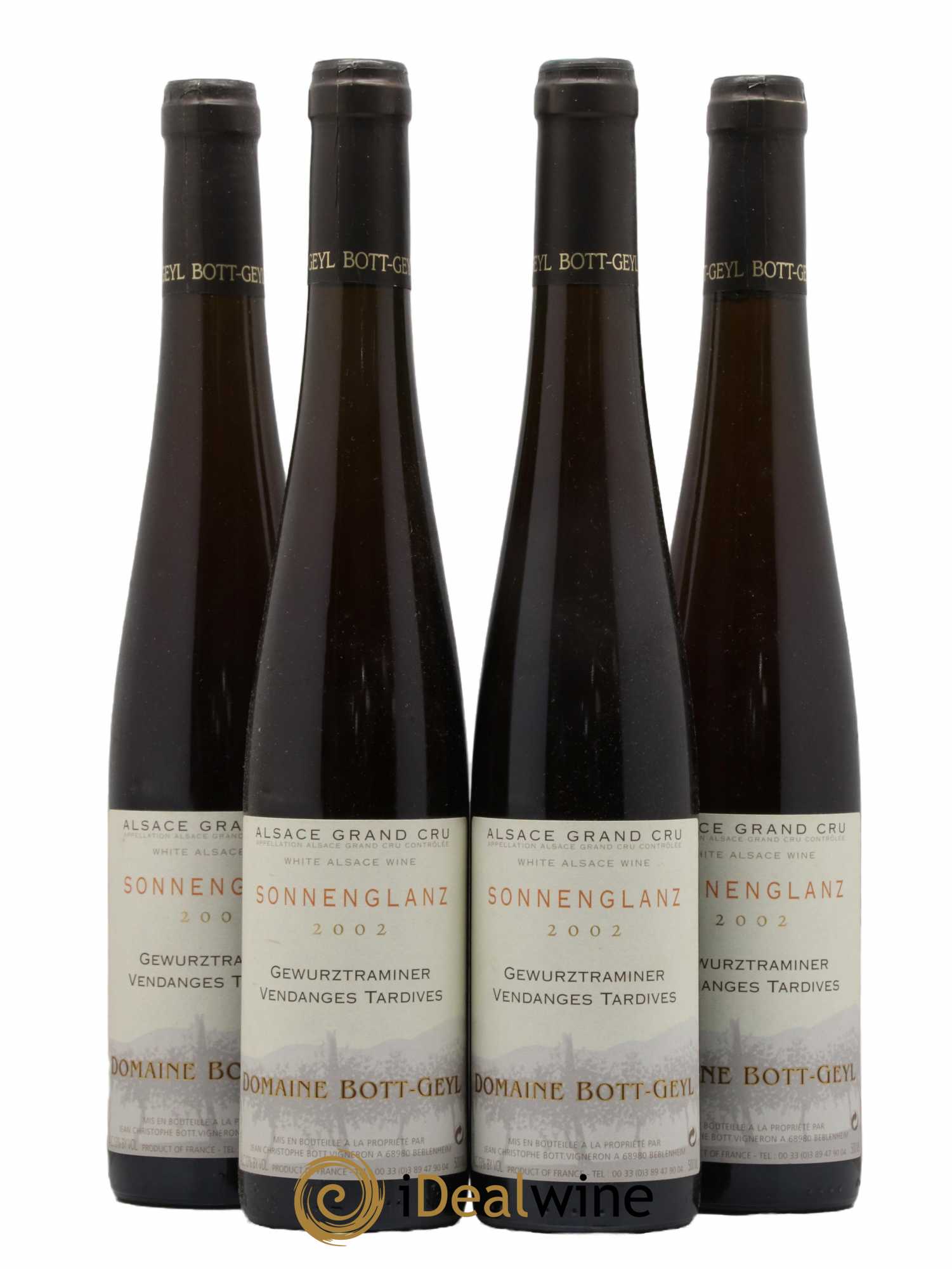
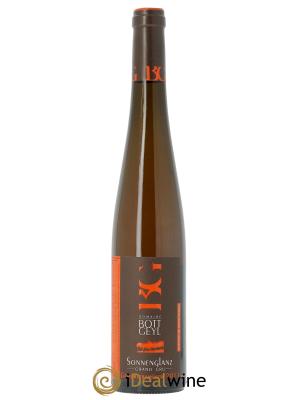
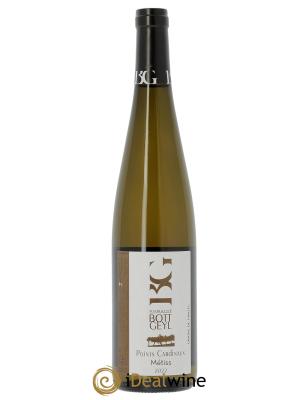
Alsace Gewurztraminer Grand Cru Sonnenglanz Vendanges Tardives Bott-Geyl (Domaine) 50cl 2002
Alsace Gewurztraminer AOC
13%
2L
Intensity
This is an exceptional wine, a symbol of human patience and the result of a truly unique climate. It is concentrated, complex and intense, marrying delightfully well with regional specialities such as the cumin-rind Munster cheese.
More infoLot presentation
Alsace Gewurztraminer Grand Cru Sonnenglanz Vendanges Tardives Bott-Geyl (Domaine) 50cl 2002
The wine
The Sonnenglanz Grand Cru sits at an altitude of 220-270 metres, with an south-easterly exposure and whose pebbly limestone and marl soil is particularly favourable to Gewürztraminer noble rot wines. This is a Vendanges Tardives cuvée: the raisined, botryrised grapes are harvested in mid-October and account for the wine’s complexity. Try pairing it alongside a local cumin-rind Munster.
About the Producer Bott-Geyl
The heir to a family tradition dating back to 1795, when his ancestor Jean-Martin Geyl began ploughing the vines and making wine, Jean-Chrsitophe Bott has managed Domaine Bott-Geyl since 1993. He works with small yields, converting the property to organic farming in 2000 and biodynamic methods in 2002, and vinifies his wines in a natural, minimal intervention style.
The property consists of 16 hectares and includes 5 grands crus and 3 localities. 75 plots are spread over seven communes, from Ribeauvillé to Kientzheim. It is of vital importance in the vineyard to understand the nature of the soil in which the vines are growing, and to be able to care for it in an appropriate manner (hoeing, ploughing, spreading of organic composts etc.).
To control yields, the property prunes the vines severely in the winter. Planting density is also an important factor (ideally it should be between 5,500 and 7,800 vines per hectare) so as to oblige the vines to develop deep roots and fully express the subtlety of the terroir.
After manual harvests, alcoholic fermentation takes three to six months: in this way the wines gain complexity and intensity. No enzymes, additional sugar or yeast are added to the musts, and the wines are not fined. The next stage is racking: the wines are separated from the lees and gradually clarify. The wines are aged on the lees for four to eight months, which enhances their texture and gives them greater finesse. After bottling the wines are stored in a temperature-controlled cellar for several months, or even years in some cases, before being released on to the market.
Similar lots
You might also like...
to statistics for over
150,000 price estimates