

Loading

Wine for sale: Fixed price Beaujolais

| 270 results

Winegrowing in the Beaujolais region dates back to the arrival of the Romans, and from the 11th century, it was subsequently developed by monks. In the 14th century, Philip the Bold banished Gamay from northern Burgundy. It was better suited to the Beaujolais region and was thus more widely planted there. Today, it is the region’s staple grape variety, whereas Chardonnay is the predominant variety for whites. The region comprises around 17,000 hectares of vineyards.

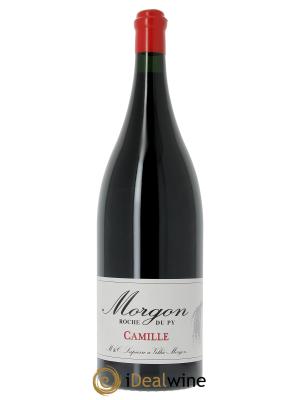
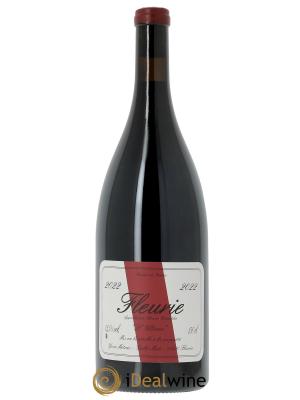
Beaujolais wines used to be seen as poor-quality thirst-quenchers, not least because of the bad press surrounding Beaujolais Nouveau, but they have now won back the hearts of wine lovers and Beaujolais is now in fashion. This renewed interest in Beaujolais wines can be explained in particular by the style of the wines, as well as the methods of viticulture and vinification – many organic, biodynamic and natural wines are made – which are perfectly in tune with today’s tastes. The region’s ten different crus (e.g. Morgon, Fleurie, Moulin-à-Vent, Brouilly, Saint-Amour, etc.), have much to offer, from very supple, fruity wines – which can be especially aromatic thanks to the unique carbonic maceration winemaking technique widely used in Beaujolais – to more structured wines suitable for laying down. There is a regional and village appellation classification system for the wines and some localities have also applied for premier cru status.

The region is also home to a strong natural wine movement, inspired by pioneers such as Marcel Lapierre, Jean Foillard and Georges Descombes.
Beaujolais

Winegrowing in the Beaujolais region dates back to the arrival of the Romans, and from the 11th century, it was subsequently developed by monks. In the 14th century, Philip the Bold banished Gamay from northern Burgundy. It was better suited to the Beaujolais region and was thus more widely planted there. Today, it is the region’s staple grape variety, whereas Chardonnay is the predominant variety for whites. The region comprises around 17,000 hectares of vineyards.

Beaujolais wines used to be seen as poor-quality thirst-quenchers, not least because of the bad press surrounding Beaujolais Nouveau, but they have now won back the hearts of wine lovers and Beaujolais is now in fashion. This renewed interest in Beaujolais wines can be explained in particular by the style of the wines, as well as the methods of viticulture and vinification – many organic, biodynamic and natural wines are made – which are perfectly in tune with today’s tastes. The region’s ten different crus (e.g. Morgon, Fleurie, Moulin-à-Vent, Brouilly, Saint-Amour, etc.), have much to offer, from very supple, fruity wines – which can be especially aromatic thanks to the unique carbonic maceration winemaking technique widely used in Beaujolais – to more structured wines suitable for laying down. There is a regional and village appellation classification system for the wines and some localities have also applied for premier cru status.

The region is also home to a strong natural wine movement, inspired by pioneers such as Marcel Lapierre, Jean Foillard and Georges Descombes.
2018
A
S
60
2018
60
2023
K
64
2023
A
S
68
2024
A
69
2023
A
69
2022
70
2018
A
S
70
2024
A
S
70
2018
70
2023
K
73
Available soon
2018
75
Availability alert
2024
A
K
80
2024
A
K
80
2022
A
K
85
2024
A
S
90
2011
A
90
2023
A
K
100
2024
A
K
120
2022
K
122
2023
K
130
2017
A
K
140
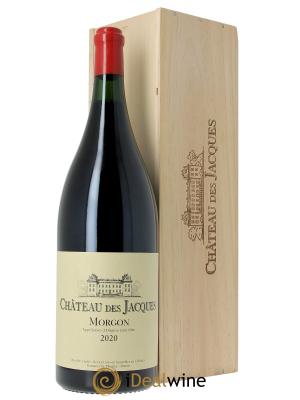
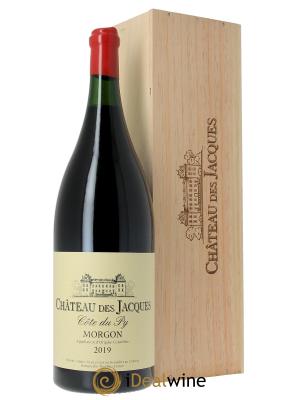
Morgon Château des Jacques

Morgon Château des Jacques

2020
140
2018
A
S
140
Available soon
2023
A
S
140
Availability alert
2024
A
150
2023
A
150
2019
180
2024
A
S
180
Fleurie l'Ultime Yvon Métras

Fleurie l'Ultime Yvon Métras

2022
A
K
500