



Build an investment cellar for your children
Assemble, pass on and grow a legacy in bottles
What if the most precious gift you could give your children wasn’t tucked away in a jewellery box, but waiting for them in your cellar? Building an investment cellar for the next generation, whether to mark a birth or birthday, or simply to share a passion for wine, is both a poetic gesture and an eminently sensible idea. It combines the pleasure of collecting fine wine, the desire to build a family legacy and the special appeal of a living collection that bears witness to the passage of time. At iDealwine, we believe wine is one of the few assets that can appreciate both in financial and sentimental value as it ages.

“Over the medium to long term, a carefully assembled wine collection can appreciate in value, becoming a legacy for the next generation as its wines steadily improve with age in both drinking quality and market value. Building an investment collection is the best way to ensure your children have the pleasure of one day opening mature bottles, lovingly chosen and inevitably rich in sentimental value. Alternatively, it also gives them the option of selling some of the bottles that have appreciated most in value.” Cyrille Jomand, iDealwine CEO
Why build an investment collection for your children?
An investment collection for your children is much more than a financial investment. It constitutes a defining act, rich with meaning that holds the promise of future pleasure. Unlike a conventional financial investment, it is about looking ahead, choosing wines today that your children will enjoy years from now, perhaps on their 18th or 30th birthday, on their wedding day or simply for a special moment shared with loved ones.
It’s also a lesson in patience and taste. As they grow, children can gradually be introduced – always in moderation – to the culture of wine: discovering the winegrowing stories behind each bottle, understanding why some wines are laid down, learning how to read a label, following changes in market value and wandering through their cellar to admire their collection as it matures… It’s a legacy with both cultural and financial value.
Building an investment collection for your children is also a far more personalised and thoughtful gift or investment than simply putting money into a bank account. It’s a chance for you to pick out each bottle individually, each with a particular reason in mind: perhaps you’re already beginning to know their tastes, or a particular wine brings back a cherished family memory… Behind every wine choice, there’s usually a lovely story to share with your child one day.
An investment collection is also a versatile gift, offering both drinking pleasure and investment potential, often a combination of the two. By buying several bottles of each wine, you give your child the option to keep their favourite bottles to enjoy and sell those they like less.
Finally, on a purely practical note, wine is one of the few tangible assets that can increase in value over time, provided you follow a few rules about what to buy and how to store it. For over 25 years, iDealwine data have shown that those who buy early, choose carefully and hold on to their wines for the long term stand to make the greatest capital gains.
Birth-year vintage: a symbolic choice and a rationale for cellaring
Starting a collection with wines from your child’s birth year is one of the loveliest and most meaningful ideas there is. There are two good reasons for this:
- The symbolism: This wine will mature alongside your child. On their 18th, 20th or 30th birthday, the bottles will be the same age as they are. It’s a uniquely personal way to mark the passage of time.
- The practical benefits: Buying wine from an outstanding vintage on release often offers the best value for money. The most sought-after wines for long-term cellaring, particularly those from Bordeaux, Burgundy, and the Rhône Valley, tend to see their greatest increase in market value over a 15- to 25-year horizon.
Good to know: Not all vintages are equal. Before buying, check the iDealwine Vintage Guide, which provides ratings from professional tasters and detailed assessments for each region and vintage.
If the birth-year vintage isn’t exceptional in a particular region, there’s nothing to stop you from adding outstanding vintages from surrounding years to the cellar: the aim is to build a cohesive collection, not to be tied to a single year. However, it’s rare for a vintage to be poor across all regions, so start by broadening your horizons! Some parents even choose to buy a few extra bottles each year to mark birthdays, milestones and special occasions.
Which wines should you choose for a collection intended for your children?
An investment cellar for your children is generally built with a timeframe of 15 to 25 years in mind. This time horizon naturally favours wines with great ageing potential, a solid structure and a reputation that gives them both long-term investment value and the promise of drinking pleasure when opened.
The classics
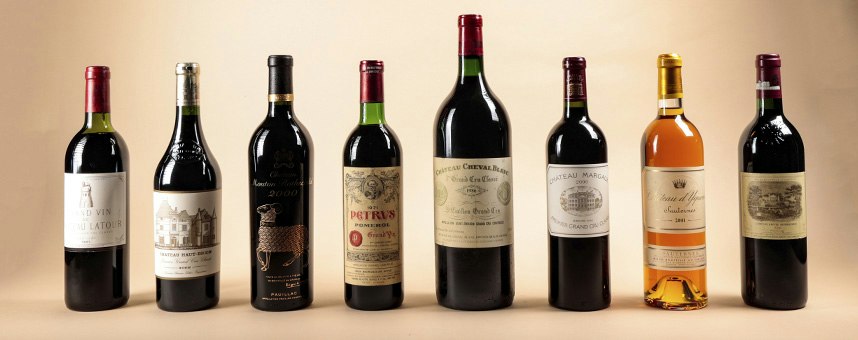
- The Bordeaux grands crus: With their exceptional ageing potential (20 to 30 years or more in great vintages), they remain the ultimate benchmark for a cellar to pass down the generations. Wines such as Château Lafite Rothschild, Château Cheval Blanc, Château Montrose, Château Pichon Longueville and Château Cos d’Estournel, for example, offer superb ageing potential. Buying Bordeaux En Primeur is also an attractive option for birth-year vintages: it allows you to secure wines before they are bottled, often at a price below their future value.
- The great wines of the Rhône Valley: Another region with outstanding ageing potential, particularly in appellations such as Côte-Rôtie, Hermitage and Châteauneuf-du-Pape. Often made from old-vine Grenache, Syrah or Mourvèdre, these wines develop extraordinary complexity with age. Producers such as Jean-Louis Chave, Château Rayas and Clos des Papes are excellent choices for a cellar intended to be passed down to the next generation.
- Burgundy: A region that’s more challenging to navigate (higher prices, often shorter ageing potential and a complex system of appellations and climats), but impossible to ignore for its prestige and emotional appeal. Premier and grand cru wines from the villages of the Côte de Nuits and the Côte de Beaune are the centrepieces of an investment cellar. Favour appellations with great ageing potential such as Chambertin or Clos de Vougeot, as well as Meursault or Montrachet for whites.
- Champagne: Great vintage Champagnes from established houses including Roederer, Bollinger, Krug, Taittinger and Dom Pérignon, or winegrowers such as Selosse and Egly-Ouriet, to name but a few, age remarkably well and can provide the perfect start to a memorable dinner in 15 or 20 years’ time, or even longer.
Hidden gems with potential
To diversify your collection and give it added potential, consider the rising stars offering excellent value for money today, with strong potential to appreciate over the next 15 years.
- Beaujolais: Domaine Lapierre (Morgon), Jean Foillard and Louis-Claude Desvignes: surprisingly, age-worthy wines that remain affordable and are steadily gaining in prestige and market value.
- Bandol: Domaine de Terrebrune, Château Pradeaux: Provençal Mourvèdre can age for 20 to 30 years with real panache, developing magnificent aromas of game, truffle and spice.
- The Loire Valley: Chenin Blanc from outstanding vintages in Savennières or Vouvray, such as wines from Huet and Clos Naudin, can develop stunning aromas of truffle and beeswax after 15 years in the cellar.
- Italy: Barolo, Barbaresco, Brunello di Montalcino, not forgetting Bolgheri and the famous Sassicaia: iconic wines for long-term cellaring, with a proven track record of appreciating in value.
Our advice: Build a balanced collection with roughly 60% safe bets such as Bordeaux, Rhône and great Burgundies alongside 40% hidden gems and wines from other regions. It’s the best way to preserve the value of your investment collection while leaving room for potential growth.
How many bottles should you buy, and when?
There’s no universal rule, but here are a few practical guidelines:
To begin with:
- Buying six to twelve wines different wines from your child’s birth-year vintage across three or four different appellations is a great place to start.
- Buy at least six bottles of each wine. That way, you can follow its development by opening bottles over the years and, if the market value has risen, retain the option of selling the remaining bottles.
Building for the long term:
An investment cellar can be built up year after year, with each birthday, Christmas or family occasion. It’s the most cost-effective approach, and the most personal. Year after year, a few carefully chosen bottles come together to form a distinctive collection, rich in memories.
Have a defined timescale in mind:
If you plan to give your child the collection for their 18th birthday (or when they turn 20 or 25), work backwards to plan your purchases:
- Wines with 20+ years of ageing potential for bottles bought to mark a birth.
- Wines with 10–15 years of ageing potential for bottles bought when your child is five to seven years old.
- Wines with 5–10 years of ageing potential for bottles bought during their teenage years, which may already be approaching their peak.
Storage: the key to passing your wines on successfully
An investment collection is only valuable if the wines are stored in the right conditions. This is arguably the single most important factor, even more than the choice of wines themselves.
The ideal storage conditions
- A stable temperature between 10°C–14°C: Sudden temperature fluctuations are wine’s worst enemy, as they can irreversibly accelerate its ageing.
- Humidity between 70% and 75%: If a cellar is too dry, corks can dry out, increasing the risk of oxidation. Too much humidity can damage labels, affecting resale value.
- Complete darkness: UV light breaks down the aromatic compounds in wine. That’s why wine bottles are made of tinted glass, although they’re not invincible!
- No vibrations: Often overlooked, vibrations can be a real concern for wines stored over very long periods.
Protect the labels
Damaged labels can reduce a wine’s resale value. To protect them:
- Store bottles horizontally on clean, stable wine racks.
- In a very damp cellar, protect the labels of valuable bottles with a layer of cling film or clear label protectors.
The professional storage option
If you don’t have a natural cellar with ideal conditions, iDealwine offers a professional storage service, with secure, insured facilities where conditions are carefully controlled to ensure optimal preservation. You remain in control at all times, with the option of having your wines delivered to your home, selling them directly and accessing your online cellar whenever you like. It’s the perfect solution for an investment cellar you can pass on with complete confidence.
Tax and inheritance: what you need to know
This is an often-overlooked consideration, but an essential one once your cellar reaches a substantial value.
Tax on resale
In France, bottles of wine are classed as movable property. In practice, any capital gains realised on resale are taxed at a combined rate of 36.2% (19% income tax + 17.2% social contributions), but only if sale proceeds exceed €5,000. Above this threshold, a 5% annual allowance applies from the third year of ownership, leading to full exemption after 22 years.
This tax regime is particularly favourable for a long-term investment cellar: if you bought the wine when your child was born, it will already have been fully exempt from capital gains tax for several years by the time they sell it at the age of 25. Make sure you keep your purchase invoices in a safe place.
Gifting your collection to your children
You can also pass on your cellar during your lifetime, and doing so is often a wise move.
- A gift from parent to child benefits from a tax-free allowance of €100,000 per parent and per child, which can be renewed every 15 years. This means that a cellar of considerable value can be passed on tax-free.
- Planning ahead can help ensure your cellar is not subject to inheritance tax at the full rate when you pass away.
⚠️ This information is provided for guidance only and is no substitute for advice from a tax lawyer or a notary, who can assess your personal circumstances.
If you inherit a collection
Have you inherited a collection and want to know how much it’s worth, sell it or add it to your own collection? iDealwine offers a free valuation carried out by its experts, based on the iDealwine Price Estimate, the market’s undisputed benchmark since 2000, along with personalised advice tailored to your circumstances.
iDealwine, your long-term partner
Building an investment collection for your children is a project that deserves a reliable, experienced, long-term partner. For over 25 years, iDealwine has supported wine lovers at every stage of their wine journey, from buying and storing wines to tracking their value and selling them.
How iDealwine can help you
Build your tailor-made collection: Our experts are here to help you select wines based on your tastes, budget and intended timeframe. Tailor-made iDealwine cellar →
Track the value of your collection: The iDealwine Price Estimate and online cellar management tool allow you to monitor the performance of your wine portfolio in real time.
Store with confidence: Our professional wine storage cellar ensures optimal conditions, year after year.
Sell at the right time: When the time comes, whether you’re looking to make a profit or pass on a ‘ready-to-enjoy’ cellar to your children, our online auctions and wine sales service offer you maximum exposure and competitive market prices.
Advice from Raphaël de Fonscolombe, Head of Sales: “Make sure your collection is secure and spread the risk by storing your wines in different locations. Remember to check your home insurance policy too, as your insurer should be able to take the value of your cellar into account. Above all, choose wines that inspire you. If they don’t increase in value as you’d hoped, you’ll still have the best consolation of all: sharing and enjoying them with your loved ones.”
Further reading
Investment collection FAQ
What is an investment collection?
An investment cellar is a collection of wines built up over the long term with the intention of drinking them, passing them on or selling them. It combines the pleasure of wine, the desire to pass something on to the next generation and the potential for financial appreciation.
Which wines should I choose for an investment collection?
Focus on wines with good ageing potential from established regions such as Bordeaux, Burgundy and the Rhône Valley, Champagne or Italy. Diversify across appellations and combine safe bets with more unusual wines.
Should I buy from my child’s birth year?
Yes, it’s a particularly meaningful and symbolic choice. That said, check the iDealwine Vintage Guide: If a region’s vintage is less successful, consider diversifying your selection with wines from other vintages or appellations.
How do you look after an investment collection?
Keep your bottles away from light and vibrations, at a stable temperature, ideally between 10°C and 14°C, with sufficient humidity. Bottles must be stored horizontally.
If you don’t have a suitable cellar at home, the professional iDealwine storage cellar guarantees fully controlled conditions.
How much do I need to invest to get started?
There is no minimum budget. Start with a few carefully chosen bottles and gradually add to your collection over the years. Wine is not a guaranteed investment: its value depends on different factors, including the estate, the vintage, demand and storage conditions.
How can I track the value of my wines and pass them on?
Check the iDealwine Price Estimate regularly and keep your purchase invoices and provenance records. To find out what your cellar is worth, request a free valuation or consign your wines when the time is right.
⚠️ DISCLAIMER: iDealwine provides wine enthusiasts with the tools they need to make their own purchasing and investment decisions. Neither iDealwine nor its directors offer wine investment products, whether in their own name or on behalf of any commercial entity directly or indirectly affiliated with iDealwine. All payments for customer orders are made exclusively through the iDealwine website or directly into iDealwine’s bank account.