



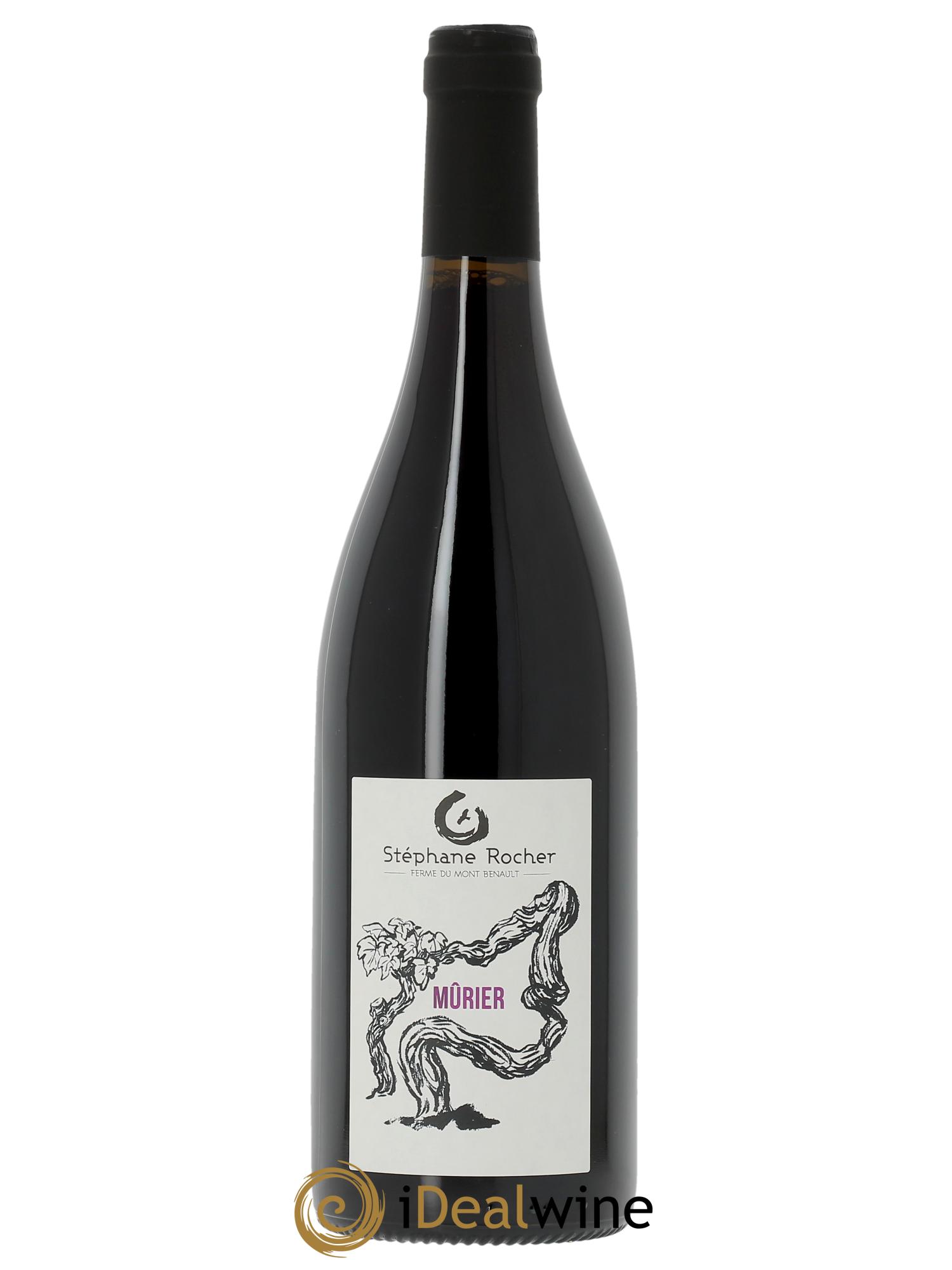
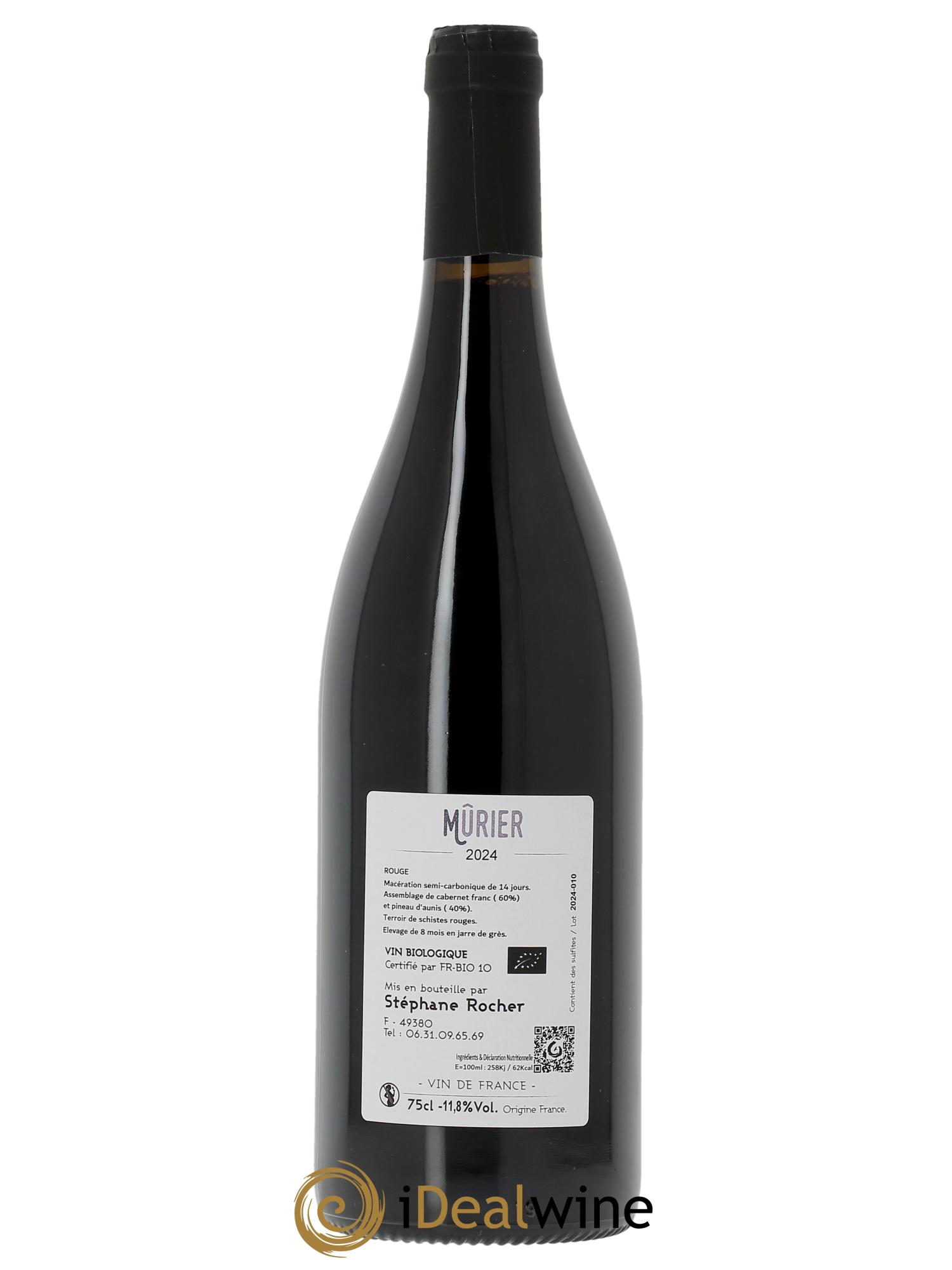
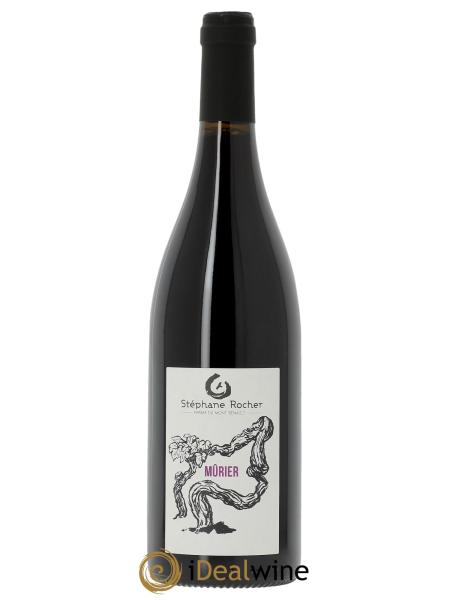
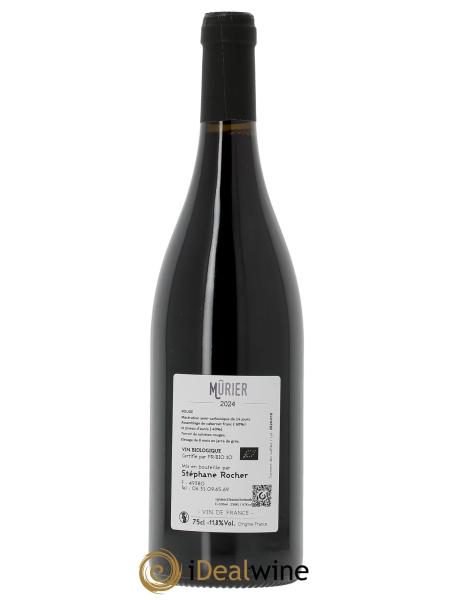
Vin de France Les Mûriers La Ferme du Mont Benault - Stéphane Rocher 2024
11.8%
0.75L
Intensity
What makes this wine special?
This blend of Cabernet Franc and Grolleau Noir offers juicy fruit, supple tannins and saline acidity, culminating in a persistent, fruit-forward finish.
More infoLes Mûriers is crafted from a meticulous blend of 80% Cabernet Franc and 20% Grolleau Noir. The vines grow on red and green schist soils, which provide excellent conditions for healthy development. Each parcel is cultivated according to organic principles, with no synthetic fertilisers or chemical inputs. In the winery, the fruit is vinified with precision. The process starts with a 14-day semi-carbonic maceration, during which fermentation takes place naturally. The wine is then aged for several months in vat.
The wine displays a stunning ruby-red hue. The intense nose reveals red and black berry fruit, alongside floral notes and fresh herbs. On the palate, a full, juicy attack opens onto supple tannins, leading into a fruit-driven, persistent finish.

About the Producer La Ferme du Mont Benault
★ Partner ProducerBased in Mont Benault, between Beaulieu-sur-Layon and Bellevigne-en-Layon, Stéphane Rocher carefully nurtures his 25-hectare like a cherished garden, with 21 hectares forming a single block of which just 8 hectares planted to vine. After several years working in communications in Paris, he returned to his roots following formal training in viticulture. Working largely alone, with only part-time help, he champions a form of viticulture that places biodiversity at its core, with hedgerows, groves and woodland deliberately maintained throughout the estate which holds organic certification.
The estate is planted to a broad palette of varieties led by Chenin Blanc (four hectares, including old vines aged 50 to 70 years), Cabernet Franc, Grolleau, Pineau d’Aunis and Teinturier, among others. Although the terroirs lie within the Coteaux du Layon appellation, Stéphane chooses to bottle his wines as Vin de France. His terroirs offer a textbook expression of Anjou’s geological patchwork: rhyolite, spilite, schist and basalt all feature, and are proudly referenced on the back labels of the estate’s wines.
In the winery, the approach is deliberately low-intervention with native yeasts, trace amounts of sulphur (20–30 mg/l total SO₂), and ageing in amphorae, vats or old casks. Yields are kept low – between 20 and 50 hl/ha depending on vine age – resulting in an annual production of around 30,000 bottles.
Detailed characteristics
- Quantity:
- 1 bottle
- Level:
- 1 Normal
- Observation:
- 1 Normal
- Origin:
- producer
- Recoverable VAT:
- yes
- Wooden case:
- no
- Local excise duty seal:
- no
- Alcohol percentage:
- 11.8 %
- Region:
- Loire Valley
- Appellation:
- Vin de France
- Owner:
- La Ferme du Mont Benault - Stéphane Rocher
- Vintage:
- 2024
- Colour:
- red
- Service temperature:
- 15°
- Viticulture:
- organic and natural More information....
- Intensity:
- classic
- Leading aroma:
- fruity
- Tasting occasion:
- food-friendly wine
- Grape variety:
- Cabernet Franc
You might also like...
Similar lots
to statistics for over
150,000 price estimates