


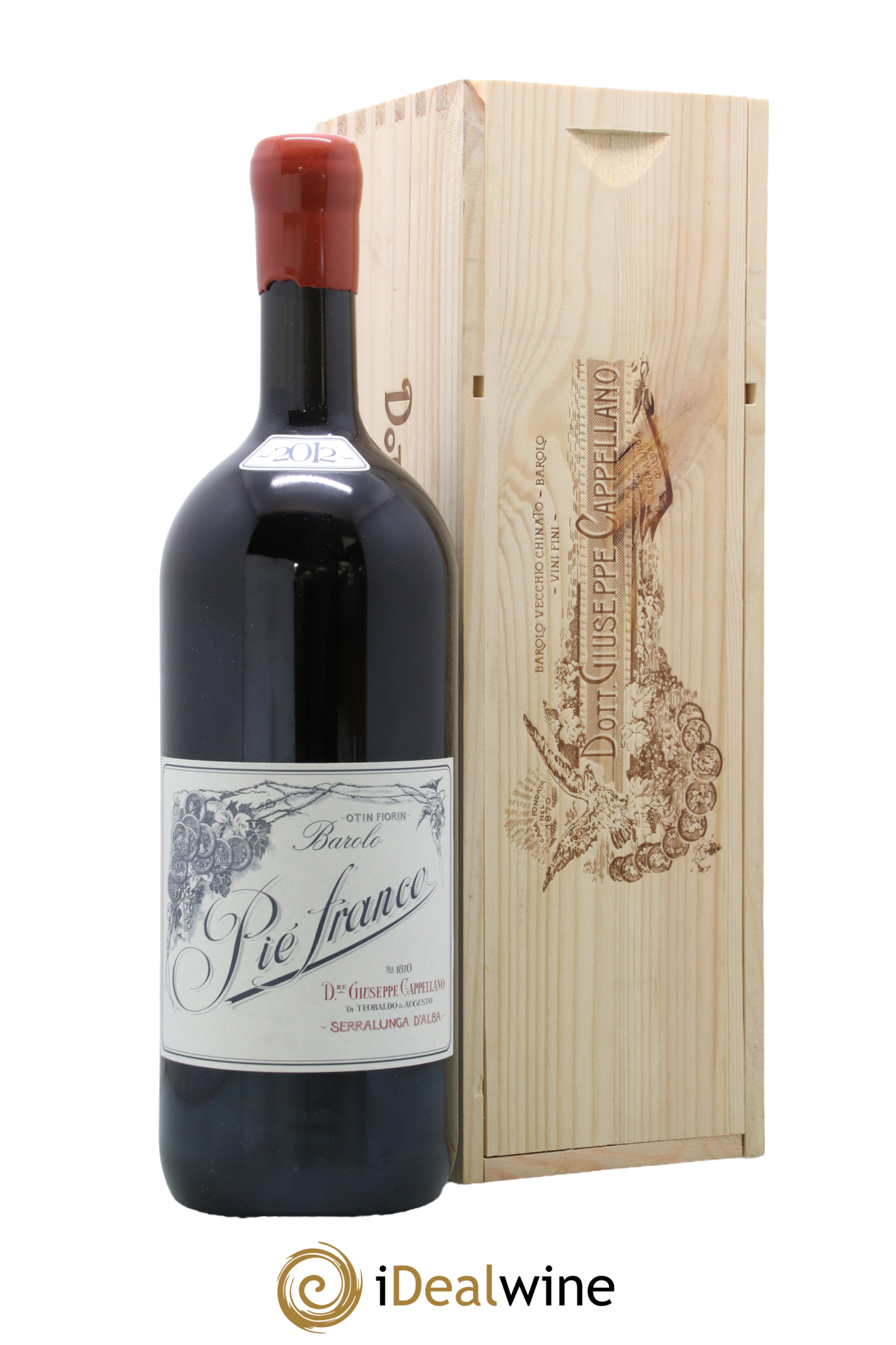
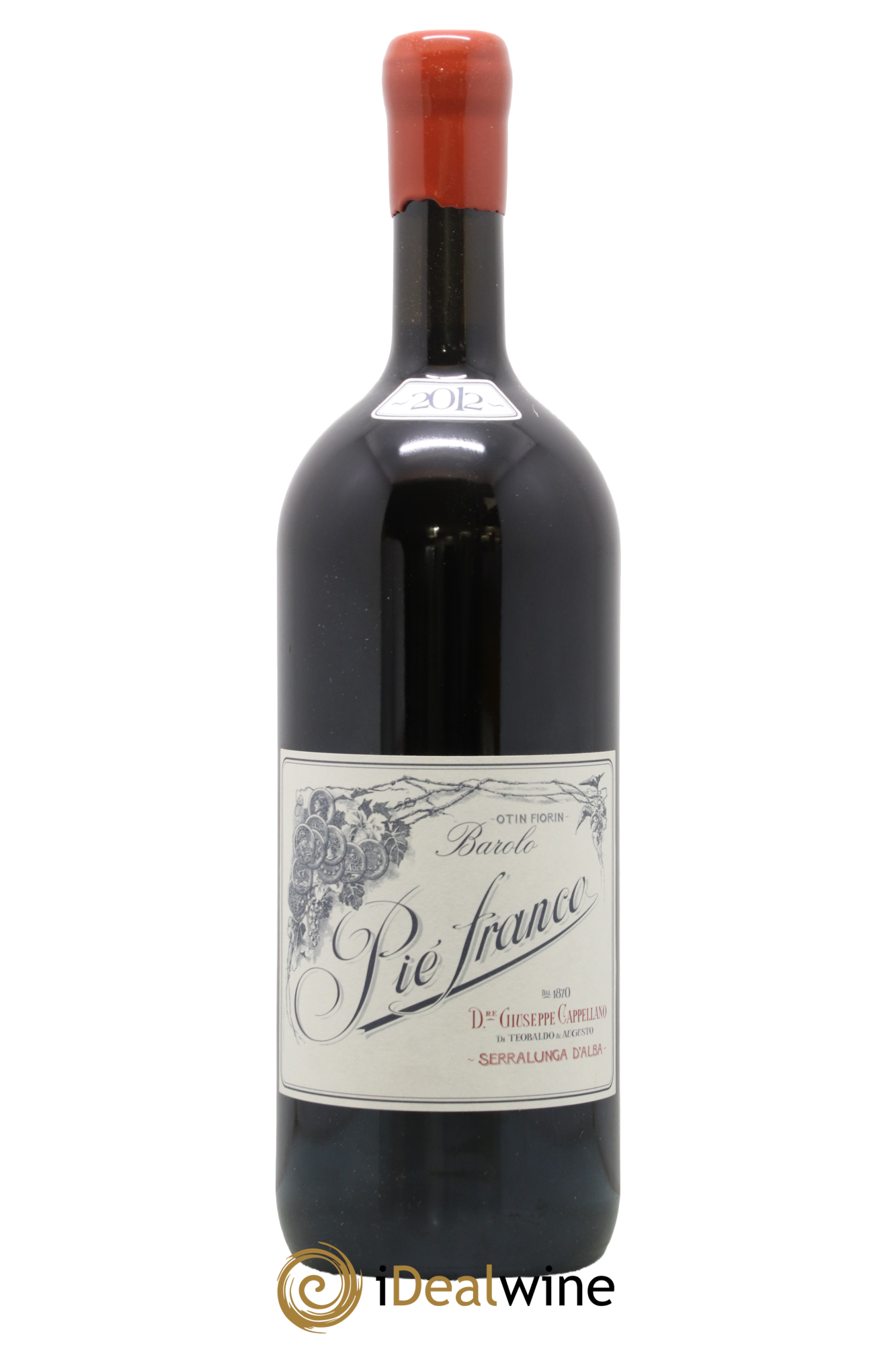
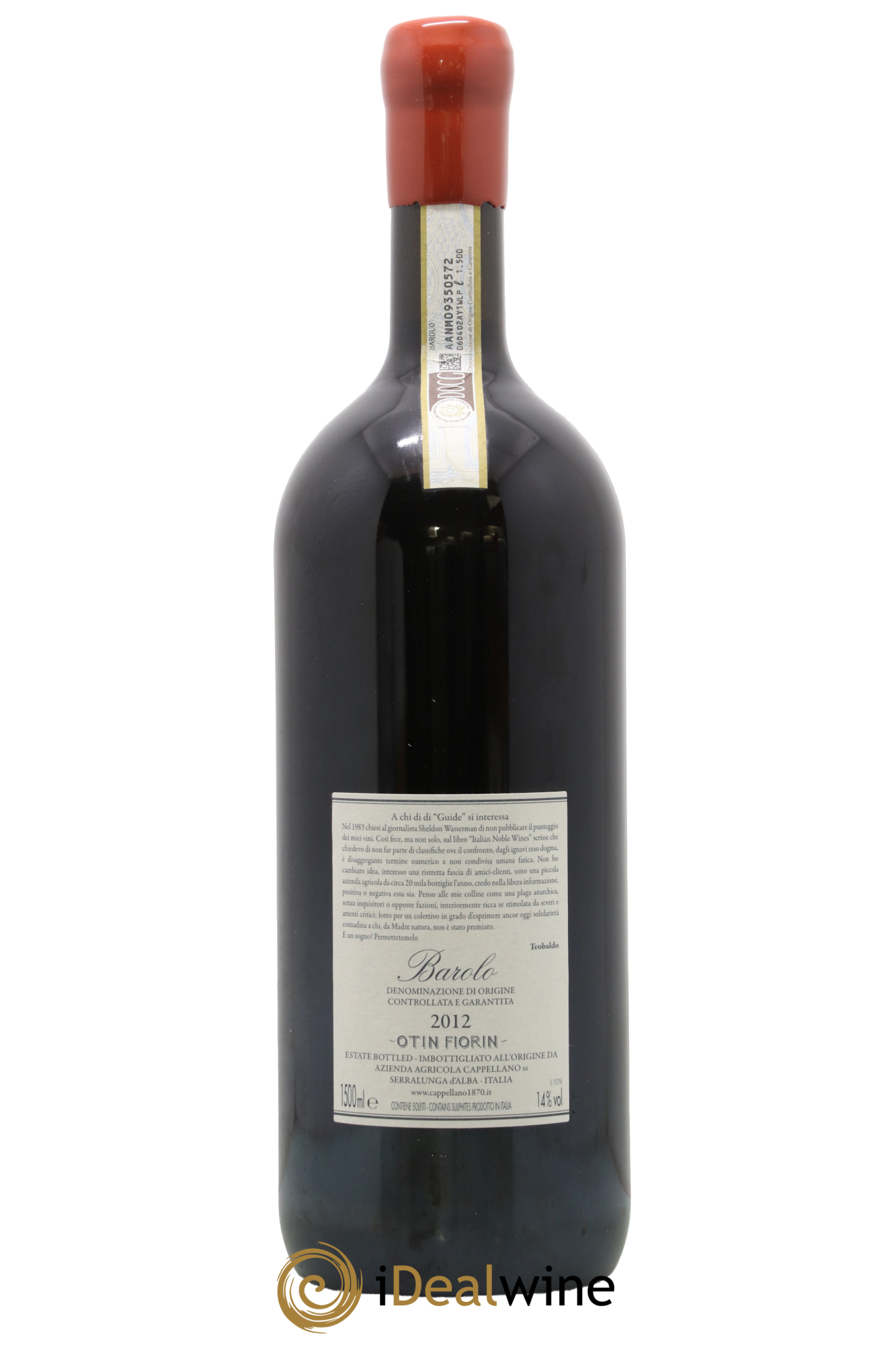
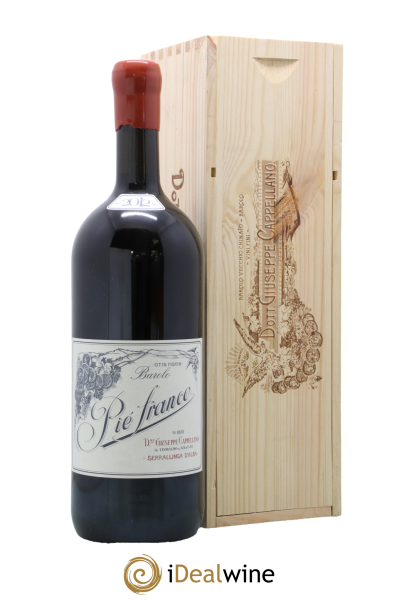
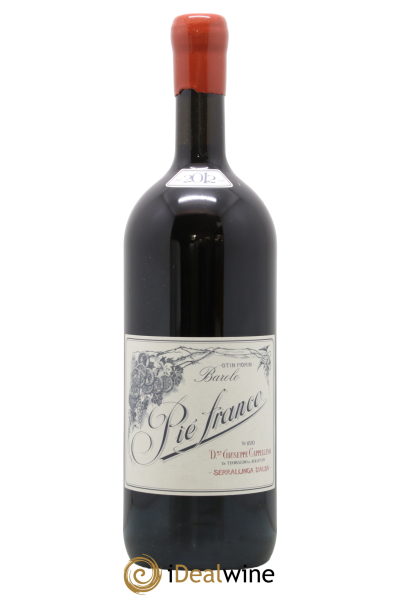
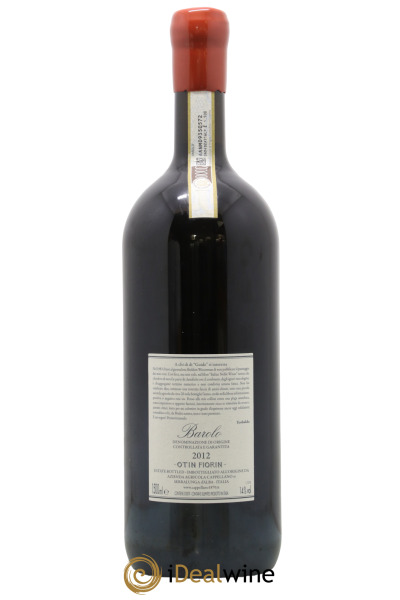
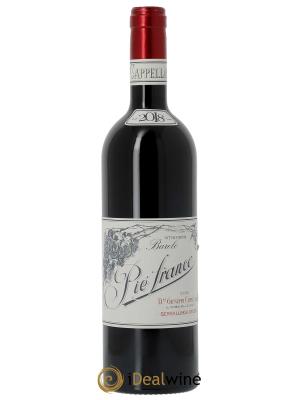
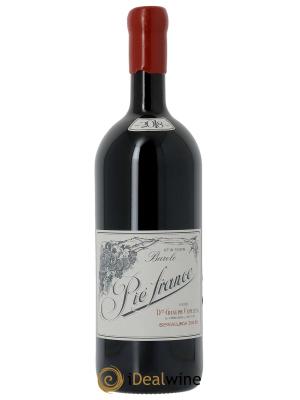
Barolo DOCG Pié Franco Cappellano 2012
14%
1.5L
Intensity


Lot presentation
Barolo DOCG Pié Franco Cappellano 2012
The wine
This cuvée is an audacious bet that was considered wild at the time of its creation, when Teobaldo Cappellano launched the project in the 1980s. This wine grower wanted to grow a few rows of ungrafted Nebbiolo to discover the original, pure expression of Barolo. This decision was also an homage to his grandfather Giovanni who spent his last years in Africa, trying to understand whether the American grafting system was the only solution. In spite of the pushback and of all the odds, these vines have never been blighted by phylloxera. Today, the domain continues this work with organic vine growing, the Nebbiolo grapes benefiting from ideal, south-facing slopes. In the winery, vinification involves little intervention. Indigenous yeasts kick off a fermentation that lasts for two to three weeks. Maturation is long, refined further by extra ageing time in the cellar once the wine is bottled. It is garnet red in colour with an intense bouquet marked by notes of cherry, flowers and aromatic herbs. The palate is structured by tannins and lifted by a fine acidity.
With a history spanning more than 150 years, Cappellano stands among Barolo’s most revered family estates. That story began when the current owner’s great-great-grandfather, Filippo Cappellano, a local notary, who decided, at the age of 48, to bring together 60 hectares of land into a single estate. His work, together with that of his family, laid the foundations for the future success of the estate. The wines of Giovanni Cappellano, Filippo’s son, were awarded a bronze medal at the 1889 Paris Exposition. The next generation saw Teobaldo Cappellano build on that legacy, devoting himself to meticulous vineyard work and careful winemaking in pursuit of the highest quality. Today, the current owner has embraced a different challenge: guiding nature while allowing it to express itself. He describes the estate as a ‘conservator’, believing that preserving knowledge, traditions and vineyard practices is fundamental. Accordingly, the vines are farmed organically, while work in the cellar is kept as low-intervention as possible.
Similar lots
You might also like...

to statistics for over
150,000 price estimates